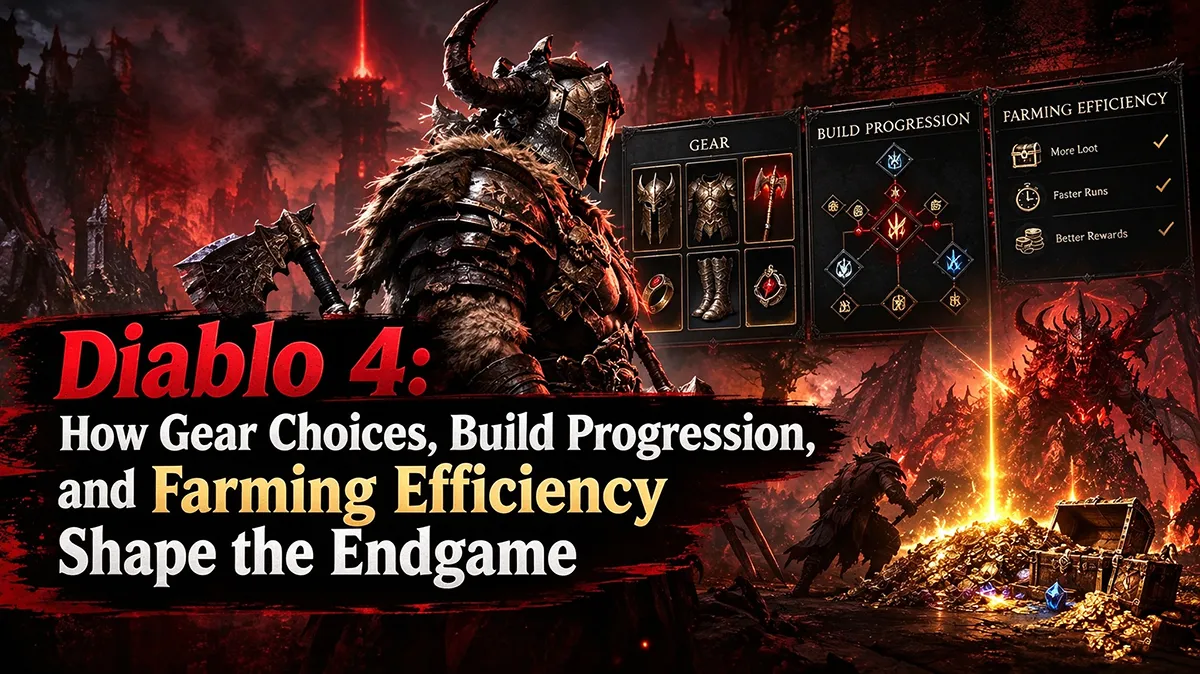
Diablo 4 has always revolved around one central question: how far can you push your character with the gear you find? From the first legendary drop during the campaign to the painstaking search for powerful endgame upgrades, equipment remains one of the most important parts of the experience. However, as players spend more time exploring Sanctuary, the way they approach loot, character progression, and farming efficiency continues to evolve.
For many players, the appeal of Diablo 4 comes from the freedom to experiment. A new legendary aspect can transform an ordinary skill into the centerpiece of a build, while a carefully optimized weapon can make a difficult encounter feel considerably more manageable. Yet this flexibility also creates a familiar challenge: finding the right items without spending every gaming session repeating the same activities.
Understanding how gear progression works—and when to invest time in farming, crafting, or improving an existing build—can make the journey through Sanctuary much more rewarding.
Why Equipment Still Defines the Diablo 4 Experience
In Diablo 4, equipment is more than a collection of higher numbers. The right combination of affixes, legendary powers, and build synergies determines how a character performs against increasingly demanding enemies.
A Barbarian might prioritize weapon damage and resource management, while a Sorcerer may need to balance offensive bonuses with cooldown reduction and defensive options. Rogues often benefit from equipment that complements their preferred damage rotation, and other classes have their own distinct requirements. Even within the same class, two characters using different skills can have dramatically different item priorities.
This is why blindly equipping every item with a higher item level is rarely an ideal long-term strategy. A seemingly modest upgrade can outperform a more powerful-looking drop if its attributes better support the build.
Players should pay attention to several factors when evaluating equipment:
- Affixes and attributes: Look for bonuses that directly improve your primary damage source, resource economy, survivability, or skill rotation.
- Legendary aspects: Certain effects are essential to a build’s core mechanics, making them more valuable than small increases in raw stats.
- Defensive balance: Higher damage means little if your character cannot survive elite encounters or boss mechanics.
- Upgrade potential: Consider whether an item is worth investing materials and gold into, particularly when a replacement may be just around the corner.
Learning to recognize meaningful upgrades is one of the most useful skills a Diablo 4 player can develop. It reduces unnecessary inventory management and helps turn every farming session into a more focused activity.
The Changing Relationship Between Farming and Progression
Loot-driven games create an interesting tension. Players want powerful equipment to progress efficiently, but obtaining that equipment often requires repeating challenging content. Diablo 4 embraces this loop, making the selection of farming activities an important part of endgame planning.
Not every activity serves the same purpose. Some encounters are better suited to collecting general loot, while specific bosses or endgame systems may offer more targeted opportunities to pursue particular rewards. Seasonal objectives can also encourage players to explore activities they might otherwise overlook.
The key is to match the activity to the upgrade you actually need.
If your weapon is significantly behind the rest of your equipment, prioritize content that gives you reasonable opportunities to find better weapons. If your build already deals substantial damage but struggles to survive, focus on defensive affixes and the systems that help you improve them. If your character performs well in ordinary encounters but struggles against bosses, examine your damage rotation and single-target setup before assuming that every problem requires a complete gear replacement.
This approach is especially valuable for players with limited gaming time. Instead of farming whatever happens to be convenient, establish a clear objective for each session and adjust your route when your equipment changes.
Build Optimization Matters More Than Chasing Every Drop
One of the most common mistakes in Diablo 4 is treating every new item as a potential upgrade without considering the broader build.
A powerful endgame character is usually the result of several systems working together. Skills, passives, legendary aspects, equipment affixes, and resource management all influence the final result. Replacing one item can sometimes weaken an otherwise effective setup, particularly when the original piece provides an important bonus or supports a specific interaction.
Before committing to an upgrade, ask three questions.
First, does the new item improve the way the build is supposed to function? Second, will replacing the old item disrupt an important synergy? Third, can the new equipment be upgraded or customized to make it more effective?
These questions encourage a more deliberate approach to gearing. They also make experimentation less expensive, since players can identify which changes produce meaningful improvements rather than spending resources on every promising drop.
For players who enjoy testing different builds, maintaining separate equipment options can also be useful. A setup designed for clearing groups of enemies may not perform as well in a prolonged boss encounter. Keeping alternative pieces available allows you to adapt without rebuilding your entire character every time the activity changes.
Managing Gold and Materials Without Slowing Down
Gold and crafting materials are essential parts of Diablo 4’s progression economy. They support equipment upgrades, item customization, and other systems that help characters become more powerful. However, resources can disappear quickly when players repeatedly modify gear that they replace shortly afterward.
A practical approach is to divide equipment improvements into immediate needs and long-term investments.
Immediate upgrades are changes that noticeably improve your current performance. These may include replacing an underpowered weapon, correcting a major defensive weakness, or obtaining an item that enables your intended build.
Long-term investments involve equipment that is already close to your desired endgame configuration. These items may justify additional resources because they are likely to remain useful for longer.
Avoid spending heavily on temporary equipment unless the improvement is significant enough to justify the cost. At the same time, do not become so cautious that you refuse to upgrade anything. Better equipment can improve farming speed, and faster farming can help you recover the resources spent on progression.
The objective is not to preserve every coin. It is to spend resources where they produce the greatest practical benefit.
Is It Worth Looking for Additional Ways to Obtain Diablo 4 Items?
As players become more familiar with the endgame, some begin looking beyond traditional farming routes for ways to make equipment progression more convenient. This is where the phrase Buy Diablo 4 items enters the broader conversation about time, accessibility, and the value players place on their gaming experience.
The decision depends on personal priorities. Some players enjoy the entire process of farming, identifying drops, and gradually assembling an optimized build. For them, obtaining an upgrade through gameplay is part of the satisfaction. Others have limited time and may be more interested in reaching a particular build milestone or spending more of their sessions on challenging encounters.
Neither preference changes the underlying importance of understanding itemization. Players still need to know which equipment suits their class, which attributes matter, and how an upgrade fits into their overall progression.
Anyone considering an external item service should also exercise caution. Check the game’s current rules, verify the provider’s reputation, understand the delivery process, and review the risks associated with account security and third-party transactions. Availability and permitted trading methods can change, so never assume that every item or service is compatible with the game’s current systems.
EZBUFF is one name players may encounter when researching gaming-related item services. If you are considering EZBUFF, evaluate its current Diablo 4 offering, terms, and support information before making a decision. The important point is to approach any service as an option to research carefully rather than an automatic requirement for enjoying the game.
Ultimately, a purchase should complement your gaming goals, not replace the knowledge needed to build an effective character.
Seasonal Content Keeps the Loot Hunt Interesting
Diablo 4’s seasonal structure provides another reason to rethink equipment priorities. Seasonal mechanics, balance adjustments, new rewards, and changes to available activities can influence which builds players choose and how they approach progression.
A setup that performs well under one set of conditions may become less attractive after balance changes or the introduction of new mechanics. Likewise, equipment that once seemed unremarkable may become more valuable when a different skill interaction or build strategy gains popularity.
This makes flexibility an important part of long-term progression. Rather than committing all your resources to a single configuration immediately, consider how much experimentation you expect to do during a season.
Follow reliable patch notes and class guides, but do not assume that a popular build is automatically the best choice for your circumstances. Some builds prioritize speed, others focus on boss damage, and some offer a more forgiving experience for players learning difficult encounters.
The best equipment is ultimately the equipment that supports your preferred way of playing.
How to Make Every Farming Session More Productive
Improving your farming efficiency does not necessarily require a more complicated build or longer gaming sessions. Often, a few practical adjustments can make a noticeable difference.
Start by identifying the weakest part of your character. If your damage is low, inspect your weapon, offensive affixes, and skill synergies. If you frequently die, examine your defensive setup and how you respond to enemy mechanics. If fights take too long despite strong equipment, check whether your build is optimized for the activity you are attempting.
Next, establish a realistic farming goal. Instead of measuring success only by the number of legendary items collected, focus on useful outcomes: obtaining a better weapon, improving a critical affix, gathering the materials needed for an upgrade, or completing a challenging encounter more consistently.
Finally, review your inventory regularly. Salvaging or selling unnecessary equipment helps maintain a manageable inventory and can support future upgrades, depending on the game’s current systems and your needs.
These habits make progression more predictable without removing the excitement of finding an unexpected upgrade.
Finding Your Own Balance Between Time and Progress
Diablo 4 works best when players find a progression rhythm that matches their interests. Dedicated players may enjoy spending hours refining every affix and testing increasingly specialized builds. Casual players may prefer a straightforward setup that handles most content without demanding constant adjustments.
The discussion around Buy Diablo 4 items reflects this broader question: how much time do players want to spend obtaining equipment, and how much do they want to spend using it?
There is no universal answer. Farming remains a central part of the game’s identity, while efficient planning, thoughtful resource management, and a clear understanding of build requirements can reduce unnecessary repetition. For players researching alternatives, EZBUFF can be considered alongside other options, provided they carefully assess the relevant terms, risks, and compatibility with current game rules.
What matters most is making informed decisions. Understand your build before chasing upgrades, invest in equipment that supports your goals, and choose farming activities that deliver useful progress.
Sanctuary is full of dangerous enemies, difficult encounters, and opportunities to experiment. The most satisfying progression is not necessarily the fastest route to a fully equipped character. It is the process of building a character that feels powerful, learning how its systems work together, and finding new challenges worth overcoming.