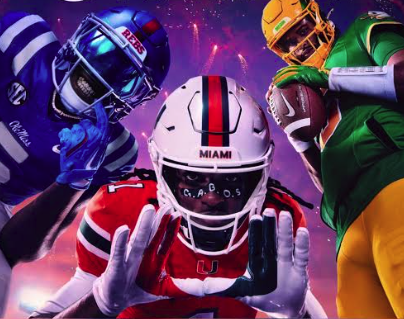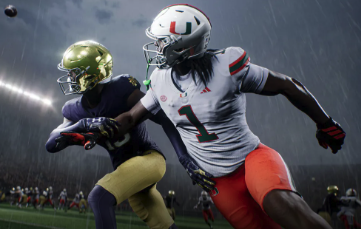
At first glance, it is easy to treat EA Sports’ latest college football game as another annual sports release. New rosters, updated uniforms, better animations, refreshed ratings and another season of Dynasty Mode are all expected. But after spending time with College Football 27, it feels increasingly clear that the game is trying to represent something bigger: the constantly changing identity of modern college football.
That matters because college football itself has changed dramatically.
The transfer portal, NIL deals, conference realignment, expanded playoff expectations and increasingly complicated eligibility rules have made the sport feel less stable than it did a decade ago. College Football 27 doesn’t simply recreate that environment. In many ways, it turns those changes into part of the game’s identity.
And that may be the most interesting thing about it.
College Football 27 Arrives at the Right Moment
The timing of College Football 27 is almost perfect.
The real 2026 college football season is getting underway, with Division I action beginning in late August. At the same time, EA is continuing to update the game based on the changing landscape of college football.
The latest roster update is a good example. EA recently added more than 1,900 players, dramatically changing team depth charts and bringing the virtual game closer to the reality of the 2026 season. Several programs have already seen major changes to their virtual rosters as new players enter the picture.
That might sound like a routine roster update, but it highlights one of the biggest challenges facing a modern college football game.
The sport moves incredibly fast.
A freshman can become a starter in a matter of weeks. A transfer can completely change a team’s offensive identity. A player can suddenly become a Heisman candidate after one breakout performance. Meanwhile, real-world eligibility rules can change the composition of an entire roster.
In that environment, a sports game cannot simply launch once and remain unchanged.
It has to evolve.
The Real College Football Problem: Nothing Stays Still
One of the fascinating storylines surrounding the 2026 season has been the continuing uncertainty over player eligibility.
Recent court decisions and conference policies have created an unusual situation involving athletes with previous professional experience and their ability to return to college football. The SEC, Big Ten, Big 12 and ACC have all taken positions on former professional athletes returning to college competition, while legal challenges continue to develop.
That situation may seem unrelated to a video game.
It isn’t.
A modern college football simulation has to deal with the same underlying question: what exactly defines a college football roster?
Twenty years ago, the answer was relatively simple. Today, it is much harder.
College Football 27 therefore feels less like a traditional sports simulation and more like a snapshot of an ecosystem that is constantly being rewritten.
That’s especially noticeable in Dynasty Mode.
Dynasty Mode Is Still the Heart of the Experience
For many players, Dynasty is where College Football 27 becomes special.
The appeal isn’t necessarily taking Alabama, Ohio State or Georgia and winning the national championship every season. The real fun is building a program and watching the consequences of your decisions unfold over time.
Recruiting matters.
Player development matters.
Coaching decisions matter.
And increasingly, roster management matters.
The modern college football coach isn’t simply picking a starting quarterback and calling plays. You’re managing expectations, recruiting pipelines, transfers, development and the long-term identity of your program.
That makes Dynasty Mode feel closer to a management simulation than a traditional sports campaign.
And it creates some surprisingly personal stories.
Maybe you take a struggling program and spend five seasons building it into a contender. Maybe your star quarterback transfers after a breakout year. Maybe a three-star recruit becomes the most important player on your roster. Or perhaps you completely mismanage your recruiting class and spend two seasons trying to recover.
Those moments are what make a virtual college football universe feel alive.
EA has also continued to work on Dynasty and Team Builder, showing that these long-term systems remain an important part of the game’s development direction.
Road to Glory Has a Different Kind of Appeal
Road to Glory approaches the same world from a much more personal perspective.
Instead of managing an entire program, you’re trying to create a career.
College Football 27 expands that idea with additional customization and career progression systems, including NIL opportunities, the Heisman race, draft stock and a Legacy Score.
This is important because NIL has become one of the defining subjects in modern college sports.
Whether fans love it, dislike it or simply haven’t decided how they feel about it yet, NIL is now part of the college football conversation. Including it in Road to Glory makes the mode feel more connected to the environment surrounding real college athletes.
It also changes the fantasy.
You’re no longer simply trying to become the best quarterback on campus.
You’re building a career.
That difference gives Road to Glory more personality than a simple player progression system.
The First PC Version Changes the Conversation
Another major development is the arrival of College Football 27 on PC.
EA’s official information confirms that College Football 27 is available on Xbox Series X|S, PlayStation 5 and, for the first time in the franchise, PC.
That is a bigger deal than it might initially appear.
PC players have traditionally approached sports games differently. Modding, customization, graphical settings and community-created content have all played a major role in the longevity of sports titles on the platform.
College football is especially well suited to that culture.
There are hundreds of teams, historical rivalries, unique uniforms, stadium traditions and endless possibilities for fictional programs.
Team Builder becomes particularly interesting in that context.
The ability to create and customize programs fits naturally into the PC audience’s expectations, while also giving console players another reason to experiment with their own versions of college football.
The result is a game that feels increasingly like a platform rather than simply a yearly release.
Gameplay Still Matters More Than Everything Else
Of course, none of this matters if the actual football isn’t fun.
That is why the recent gameplay tuning is worth watching.
EA’s latest update moved College Football 27 to version 3.5 and included additional gameplay changes.
This is where the difference between a good sports game and a great one usually becomes obvious.
Players can forgive a strange roster rating.
They can forgive an occasional visual glitch.
They can even tolerate menus that aren’t perfect.
But they won’t tolerate football that doesn’t feel right.
College football has its own rhythm. The spread formations, tempo changes, option concepts, aggressive fourth-down decisions and explosive plays give the sport a personality that separates it from the NFL.
The best moments in College Football 27 are the ones where that personality comes through.
A defensive stop on fourth down.
A freshman receiver breaking loose for a 70-yard touchdown.
A rivalry game becoming unexpectedly close.
A late comeback that turns a routine Dynasty matchup into a game you remember several seasons later.
Those moments are why people keep returning.
The Economy of Building a Team
There is also another layer to modern sports games that deserves attention: how players approach progression and resources.
College Football 27 includes Ultimate Team alongside its traditional modes, continuing the broader trend of sports games offering both long-term management experiences and competitive collection-based systems. EA has also published dedicated Ultimate Team deep-dive information for the game.
This creates two very different philosophies of play.
One player might spend hours developing a fictional university in Dynasty.
Another might care almost exclusively about building the strongest Ultimate Team possible.
Neither approach is inherently wrong.
The important thing is that players understand what kind of experience they actually want.
For Dynasty players, patience and smart roster management are usually more valuable than chasing every possible upgrade. For competitive modes, however, improving a roster can become a much bigger part of the experience.
That’s why discussions around College Football 27 resources, player cards and team-building strategies are likely to remain part of the community throughout the season.
Why College Football 27 Feels Relevant in 2026
The biggest reason College Football 27 feels interesting right now is that the game mirrors the uncertainty of real college football.
The 2026 season is beginning in an environment where conference structures are changing, players can move more freely, NIL continues to reshape recruiting, and eligibility rules are being challenged in court.
Meanwhile, the game itself is receiving significant roster updates and gameplay tuning.
That creates an unusual relationship between the real sport and its digital counterpart.
The game isn’t simply trying to predict college football.
It is trying to keep up with it.
And that may become the defining challenge for sports games over the next few years.
The question isn’t whether developers can make better graphics. They obviously can.
The bigger question is whether a game can continue adapting quickly enough to represent a sport that changes faster every season.
College Football 27 is one of the more interesting attempts to answer that question.
For players who enjoy the strategy side of college football, Dynasty remains a deep rabbit hole. For people who prefer personal progression, Road to Glory provides a more focused journey. For competitive players, Ultimate Team offers an entirely different structure. And with the series finally reaching PC, the potential for customization and community involvement is much larger than before.
That’s why I wouldn’t describe College Football 27 simply as another annual football game.
It feels more like a digital version of the college football ecosystem itself: chaotic, competitive, constantly changing and occasionally unpredictable.
And honestly, that’s probably exactly what a college football game should feel like in 2026.