More than a decade after Grand Theft Auto V first arrived, GTA 6 has reached a strange point where it no longer feels like a normal upcoming game. It has become part of the wider gaming conversation — a project capable of influencing release schedules, hardware marketing, streaming platforms, online culture, and even discussions about where the open-world genre goes next.
As of September 2026, the wait is finally entering its last stretch. Rockstar Games has confirmed that Grand Theft Auto VI will launch on November 19, 2026, following its previous delay from May. The latest wave of promotion has also made it clear that Rockstar is moving from carefully controlled teases toward a much more detailed look at what players can actually expect.
And that makes this a good time to step back and ask a bigger question: what is GTA 6 actually trying to accomplish?
Vice City Is Only the Starting Point
The return to Vice City immediately gives GTA 6 a familiar identity. But Rockstar isn’t simply rebuilding the city players remember from the 2002 classic.
This time, Vice City sits inside the much broader fictional state of Leonida, giving Rockstar space to explore beaches, highways, rural areas, smaller communities and the strange contrasts associated with modern Florida-inspired America.
That setting matters because GTA has always worked best when its world is more than a collection of missions.
Los Santos in GTA V became memorable because players could simply exist there. You could drive around without a specific objective, listen to radio conversations, stumble into random situations or spend an hour doing something completely unrelated to the main story.
GTA 6 appears to be pushing that philosophy even further.
The recent gameplay presentation has reinforced Rockstar’s focus on environmental detail, character interactions and interconnected systems. Rockstar North co-head Rob Nelson has also discussed the studio’s ambition to create situations where players can become so involved in the world that they temporarily forget they’re playing a game.
That may ultimately be more important than raw graphical fidelity.
Lucia and Jason Could Change the Tone of the Series
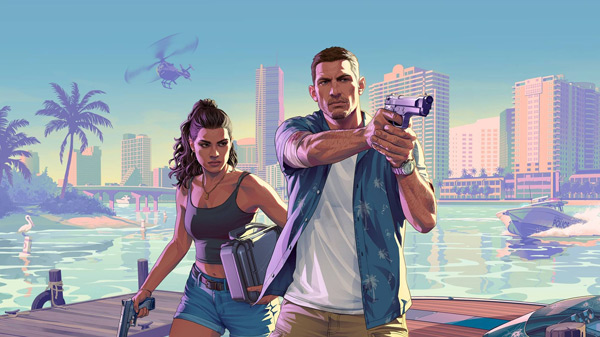
At the center of GTA 6 are Lucia and Jason, a criminal couple whose relationship provides the foundation for the story.
The setup naturally invites comparisons with Bonnie and Clyde, but Rockstar’s strongest stories have rarely been about crime alone. GTA IV was partly about immigration and identity. GTA V mocked consumer culture, celebrity obsession and corporate America.
GTA 6 has an even more complicated target.
Modern American culture is dominated by social media, influencers, viral videos, online personalities and an increasingly blurry line between reality and performance. Those subjects seem almost perfectly suited to GTA’s satirical style.
The interesting question is whether Rockstar will simply make jokes about that culture or actually use it to build a deeper world.
If it does the latter, Leonida could become one of the most interesting open-world settings Rockstar has created.
The Real Evolution May Be Player Freedom
One of the easiest mistakes to make with GTA 6 is to judge it purely through screenshots and trailers.
Of course the graphics look impressive. But graphics alone aren’t what made previous Rockstar games memorable.
The more interesting development is the apparent emphasis on systems reacting to player behavior.
Instead of treating missions as isolated sequences, Rockstar appears interested in creating situations where different choices can produce different consequences. That approach could make ordinary activities — driving, exploring, interacting with characters or avoiding trouble — feel less scripted.
For longtime GTA players, this could be the biggest evolution.
The dream isn’t simply having a larger map. It’s having a world that feels capable of surprising you.
GTA 6 Is Already Changing the Industry
The cultural impact of GTA 6 can already be seen before release.
Its enormous expected audience has created a situation where other publishers have had to think carefully about their own release schedules. Industry observers have also discussed whether the game could dominate the holiday market and reshape consumer attention around November.
Rockstar has also experimented with how GTA 6 is marketed.
The recent extended presentation was streamed through Netflix before appearing through more traditional channels, turning a game preview into something closer to a major entertainment event. Reports noted that the presentation generated enormous attention and helped demonstrate just how far video-game marketing has moved beyond conventional advertising.
Then came another interesting example of the GTA 6 effect: Sony unveiled limited-edition PlayStation 5 DualSense controllers inspired by the game during its September State of Play presentation.
At this point, GTA 6 isn’t merely being sold as a video game. It is being positioned as a major pop-culture event.
But the Hype Comes With a Risk
There is a downside to expectations this large.
After years of anticipation, some players may unconsciously expect GTA 6 to revolutionize every aspect of open-world gaming. That’s an almost impossible standard.
The smarter way to approach the game is to judge it on what Rockstar is actually attempting: creating a dense, reactive crime story inside a huge modern American-inspired world.
It doesn’t need to reinvent every mechanic.
It needs to make the world believable enough that players want to keep exploring it after the main story stops telling them where to go.
That was one of GTA V’s greatest strengths, and it remains one of the biggest reasons people are still talking about Rockstar’s games years after release.
Why I’m Still Interested in GTA 6
As someone who has spent plenty of time with open-world games, I’m actually less interested in how many vehicles GTA 6 has or how big the map is.
I’m more curious about the little things.
What happens when you make a bad decision and leave a mission area? How do NPCs react when something unexpected happens? Does the police system feel more dynamic? Can the environment generate stories that weren’t explicitly written into a mission?
Those details are where Rockstar games tend to become special.
And after more than a decade of technological and cultural change, GTA 6 has the opportunity to reflect a very different America from the one portrayed in GTA V.
That is what makes the November 19 release date feel significant.
GTA 6 isn’t just the next Grand Theft Auto game. It is Rockstar’s answer to a question the industry has been asking for years: how far can the traditional open-world formula go when developers have the technology, budget and time to build an incredibly detailed living environment?
We won’t have the complete answer until players get their hands on it.
But after everything revealed in 2026, one thing is becoming increasingly difficult to argue with: GTA 6 is shaping up to be one of those releases that people will be talking about long after launch day.