Diablo 4 has always been about the chase. Whether that means hunting for a perfect weapon, rebuilding a character around a powerful unique item, or pushing deeper into difficult endgame content, progression is one of the main reasons players keep returning to Sanctuary.
But as the game continues to evolve, the way players think about progression is changing. Modern Diablo 4 is no longer simply about finding random upgrades during a dungeon run. Builds have become more specialized, endgame activities have become more demanding, and players increasingly think about their time, resources, and gear as parts of a larger progression strategy.
That has also created a wider conversation around the in-game economy and why some players choose to buy Diablo 4 items when they want to reduce the amount of time spent preparing a character.
The Endgame Is About More Than Just Leveling
For new players, Diablo 4’s progression can initially feel straightforward. Complete quests, gain experience, replace weaker equipment, and gradually move toward more difficult content.
The experience changes once a character reaches the endgame.
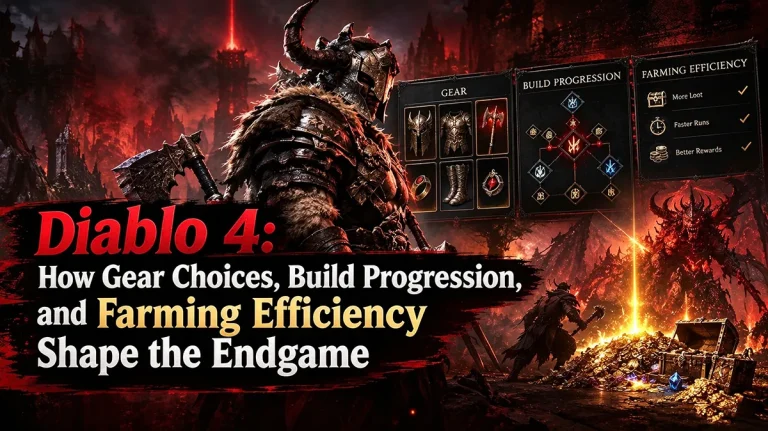
At that point, a small improvement in one piece of equipment can have a much bigger effect than simply gaining another level. Affixes, item quality, build compatibility, tempering choices, masterworking, and unique effects can all influence how a character performs.
This is where Diablo 4 starts to resemble a long-term optimization game.
A player may already have the correct build but still need several specific pieces of gear before that build reaches its intended potential. Another player might discover that their current equipment is strong enough for ordinary activities but not optimized for high-end encounters.
The difference between these two situations is often measured in hours of farming.
Why Gear Has Become Such an Important Part of the Conversation
Loot has always been central to Diablo, but modern players are more knowledgeable about what they are looking for.
Build guides, community discussions, damage calculators, tier lists, and streaming content have made it easier to understand how individual pieces of gear fit into a larger build.
That knowledge has an interesting side effect: players are less likely to view every item as equally valuable.
A random legendary may be useful while leveling, but an endgame player could immediately evaluate it based on its affixes, rolls, item power, and compatibility with a specific build.
This changes the psychology of loot hunting.
The question is no longer simply, “Did I get an upgrade?”
It becomes, “Did I get the upgrade that my build actually needs?”
That distinction is one reason the Diablo 4 item economy remains an interesting topic among players.
The Time Problem Behind Endgame Progression
One of the biggest resources in any live-service RPG is not gold or materials. It is time.
A player might enjoy running Nightmare Dungeons, Helltides, bosses, or other endgame activities for hours. Another player may enjoy theorycrafting a build much more than repeating the same activity hundreds of times to obtain a particular item.
Both are legitimate ways of engaging with the game.
This is where third-party marketplaces and services enter the conversation. Players searching for buy Diablo 4 items are often less interested in skipping the entire game than in reducing a particular bottleneck in their progression.
For some, acquiring an item can be a way to experiment with a build sooner. For others, it can simply reduce repetitive farming after they have already invested significant time into a character.
The important distinction is that Diablo 4’s gameplay still comes from what players do with their characters. Gear can influence preparation, but it does not replace learning a build, understanding combat mechanics, or mastering difficult encounters.
Build Experimentation Is Becoming a Bigger Part of Diablo 4
Another interesting trend is the rise of build experimentation.
Older ARPG habits often encouraged players to commit heavily to one character setup. Modern Diablo 4 players, however, frequently move between different builds depending on balance changes, new items, seasonal mechanics, and personal preferences.
That creates a constant demand for different equipment.
A player might spend weeks developing a powerful Sorcerer setup and then decide to try a Barbarian or Rogue build. Instead of starting the entire gearing process from zero, they may look for ways to accelerate the preparation phase.
This is one area where the broader item economy becomes particularly relevant.
The value of an item is not only determined by its raw stats. It can also be determined by what that item allows a player to do next.
The Role of EZBUFF in the Modern Player Experience
Platforms such as EZBUFF fit into this wider conversation about convenience and progression.
For players researching ways to buy Diablo 4 items, the practical concerns are usually straightforward: availability, delivery, pricing, item compatibility, and whether the process is easy to understand.
Those details matter because Diablo 4 players are generally looking for something specific rather than simply collecting random gear.
A sensible approach is to know exactly what an item does for a build before spending resources on it. Checking current build information, understanding required stats, and considering whether the item actually solves a progression problem can prevent unnecessary purchases.
In other words, the interesting part of the item economy is not simply buying something.
It is deciding why that item matters.
Diablo 4’s Economy Reflects a Changing Player Base
Diablo 4 now serves several different types of players.
There are players who enjoy starting every season from scratch. There are theorycrafters who spend hours testing interactions between skills and equipment. There are casual players who only have a few hours each week. There are collectors chasing particular items. And there are endgame-focused players who want to push their characters as far as possible.
These groups naturally have different opinions about progression.
For one player, farming for an item is part of the fun. For another, repetitive farming is simply a barrier between them and the build they want to play.
That difference is important when discussing the Diablo 4 economy because there is no single definition of the “right” way to play.
The Future of Diablo 4 Progression
The long-term health of Diablo 4 will continue to depend heavily on how Blizzard balances three things: meaningful loot, satisfying combat, and a progression system that respects player time.
If acquiring powerful gear feels completely effortless, the excitement of finding something rare can disappear.
But if obtaining the right item requires excessive repetition, players can become more interested in escaping the grind than enjoying it.
The most interesting direction is somewhere between those extremes.
Players should still have reasons to explore Sanctuary, fight bosses, test different builds, and chase rare drops. At the same time, the broader Diablo 4 ecosystem will continue to include players looking for more efficient ways to prepare their characters.
That is why discussions around buy Diablo 4 items are ultimately about more than purchasing gear. They reflect a larger change in how modern ARPG players value their time, experiment with builds, and approach endgame progression.
For players considering EZBUFF or similar services, the most useful mindset is simple: understand the build first, identify the actual bottleneck, and treat gear as one part of the overall Diablo 4 experience rather than the entire game.
Sanctuary is still built around the hunt. The difference is that today’s players have more ways to decide how much of that hunt they want to experience.