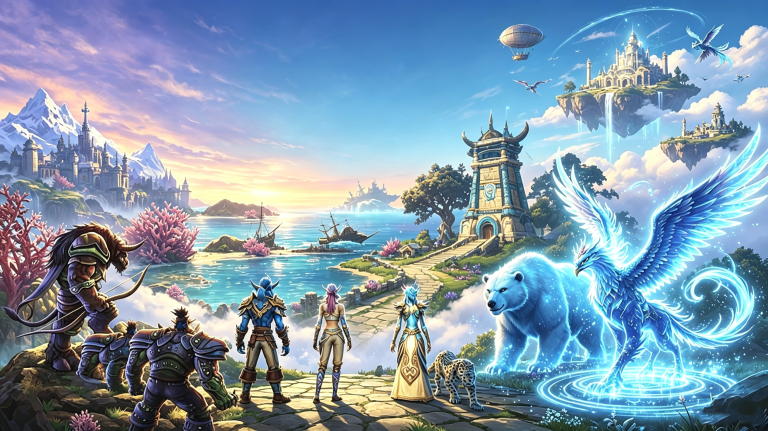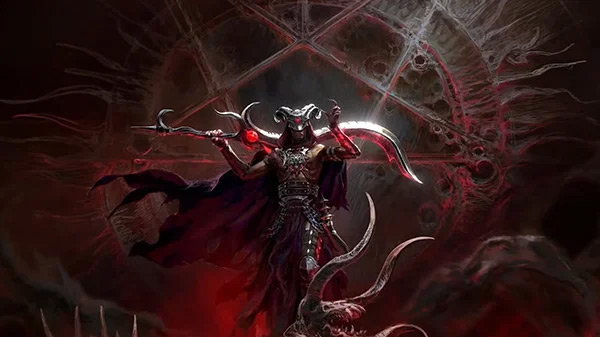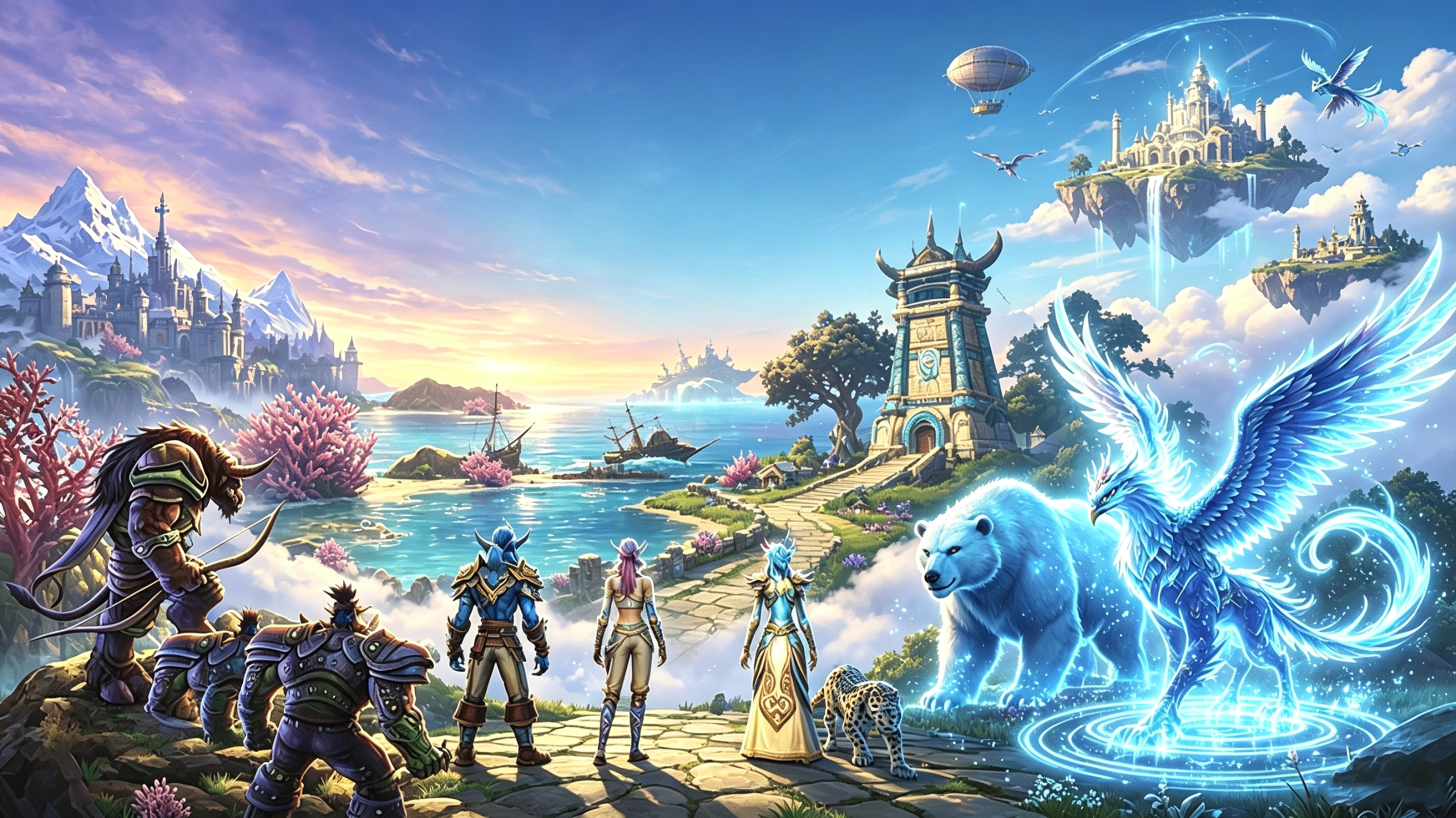
With World of Warcraft: Forever preparing to bring a new interpretation of Azeroth to players, weapon selection is expected to remain one of the most important parts of character progression. While armor and class abilities define much of a character’s identity, the right weapon can significantly influence damage output, combat range, resource management, and overall playstyle.
Blizzard’s new permanent World of Warcraft experience is designed to expand on the original Azeroth with new stories, zones, systems, dungeons, raids, and a new playable race. With the beta scheduled to begin on September 17 and the full game launching on November 4, players have plenty of reasons to start thinking about how their preferred builds may develop.
For players preparing their characters, understanding how weapons fit into different builds will be more useful than simply chasing the highest item level. A weapon that looks powerful on paper may not always be the right choice for a particular class or combat role.
Why Weapon Choice Matters in WoW Forever
Weapons are more than simple damage upgrades. Their damage range, attack speed, stat distribution, weapon type, and compatibility with class abilities can all affect how a character performs.
A fast weapon can benefit builds that depend on frequent attacks or resource generation, while a slower weapon may be more attractive for characters designed around heavier individual hits. Similarly, a weapon with useful secondary attributes can sometimes outperform a higher-damage option if those stats better support the overall build.
This makes weapon selection an important part of character planning rather than something players should leave until the end of the gearing process.
Match Weapons to Your Build Before Chasing Upgrades
The first step is to understand what your build is trying to accomplish.
A melee damage build generally wants weapons that maximize sustained or burst damage while complementing its ability rotation. Defensive builds may place greater value on survivability-related attributes or weapon combinations that support consistent threat generation.
Ranged characters have a different set of priorities. Maintaining distance, minimizing downtime, and delivering reliable damage from outside melee range can make weapon speed and stat combinations particularly important.
Before spending resources on an upgrade, players should therefore ask a simple question: does this weapon improve the way my build actually plays?
Two-Handed Weapons for Heavy-Hitting Builds
Two-handed weapons are naturally attractive for builds that prioritize large individual attacks.
Their slower attack speed can be a disadvantage for some playstyles, but the higher damage per hit can make them effective for characters built around burst windows and powerful abilities.
For players who prefer a straightforward melee approach, two-handed weapons can provide a satisfying balance between simplicity and impact. They are particularly useful when a build’s abilities scale strongly with weapon damage.
The trade-off is reduced flexibility. If an encounter requires rapid attacks, quick reactions, or frequent target switching, a slower weapon may feel less comfortable.
One-Handed Weapons for Flexible Builds
One-handed weapons provide more flexibility and can work well for characters that value adaptability.
Depending on the class and equipment setup, players may be able to combine a one-handed weapon with an off-hand item or shield. This creates opportunities to adjust a character toward damage, defense, utility, or a hybrid role.
For players who are still experimenting with their build, one-handed weapons can therefore be a practical choice. They allow more room to adjust equipment without completely changing the character’s identity.
This flexibility can become especially useful as players move between questing, dungeon content, group encounters, and other activities.
Fast Weapons vs. Slow Weapons
Attack speed is another factor that should not be overlooked.
Fast weapons can feel more responsive and may be useful for builds that benefit from frequent attacks. They can also make combat feel smoother when abilities and resource generation depend on regular weapon swings.
Slow weapons, on the other hand, can provide larger individual attacks and may better suit builds designed around burst damage.
Neither approach is automatically superior. The correct choice depends on how the weapon interacts with the rest of the character’s abilities and attributes.
Weapons for Defensive and Tank Builds
Tank and defensive builds should not evaluate weapons exclusively through raw damage.
A defensive character’s primary objective is to remain effective while controlling enemies and surviving incoming attacks. Depending on the class, weapon choice can therefore be connected to threat generation, defensive statistics, attack consistency, and overall resource management.
A slightly weaker weapon may sometimes be preferable if its attributes make the entire build more reliable.
For dungeon-focused players, consistency is often more valuable than a weapon that produces impressive numbers only under ideal conditions.
Weapons for Ranged and Spell-Based Builds
Ranged and spell-oriented characters require a different approach to weapon selection.
Instead of focusing solely on physical damage, players should consider how weapon statistics interact with their primary abilities. A weapon that provides useful attributes for spell damage, critical effects, resource management, or casting efficiency may be considerably more valuable than a generic high-damage option.
Positioning also matters. Ranged builds typically depend on maintaining distance and controlling engagement ranges, so a weapon that supports consistent damage over longer encounters can be more useful than one designed around short bursts.
Consider the Entire Equipment Setup
One of the most common mistakes when upgrading weapons is looking at the weapon in isolation.
A character’s weapon works together with armor, accessories, talents, abilities, and other equipment. Replacing one item can sometimes create an imbalance elsewhere in the build.
For example, gaining additional offensive power may be less valuable if the character already has extremely high damage but struggles to survive difficult encounters.
Players should evaluate their entire equipment setup before making expensive upgrades. This becomes increasingly important as characters approach higher-level content and individual upgrades become more expensive.
Don’t Ignore Weapon Progression Costs
Weapon upgrades also need to be considered alongside the broader economy of character progression.
Players who are trying to upgrade several pieces of equipment simultaneously can quickly consume their available resources. This is where planning becomes important.
If you are preparing to Buy WoW Forever Gold, for example, the more important consideration is how that gold fits into your overall progression plan. Gold should support meaningful upgrades rather than being spent simply because a new item is available.
Prioritize weapons that directly improve your main build before investing heavily in secondary or experimental equipment.
How to Choose the Right Weapon for Your Playstyle
There is no single weapon that will be perfect for every WoW Forever player.
A practical approach is to divide your decision into several questions:
- What is your primary role? Damage, defense, support, or hybrid.
- What range do you normally fight at? Melee, mid-range, or long-range.
- Does your build depend on fast or slow attacks?
- Which attributes improve your main abilities?
- Are you preparing for solo content or group activities?
- Will the weapon remain useful as your build develops?
Answering these questions can prevent players from making upgrades based purely on item level.
How EZBUFF Fits Into the Broader Progression Discussion
As WoW Forever approaches its beta and launch, discussions around gold, equipment, and character progression are likely to become increasingly important. Communities will naturally begin comparing different builds, weapon combinations, and upgrade paths as players gain access to the game’s systems.
For players researching ways to prepare their characters, EZBUFF can also be one of the resources they encounter while comparing WoW Forever-related progression options. The important point is to keep any external purchasing decisions secondary to understanding the game’s own mechanics and choosing equipment that actually supports the intended build.
The Best Weapon Is the One That Supports the Build
WoW Forever’s expanded approach to Azeroth gives players plenty of reasons to experiment with different character setups. As the beta approaches, weapon selection will likely become an important part of discussions around class performance and build optimization.
Rather than automatically choosing the weapon with the highest listed damage, players should consider attack speed, attributes, combat role, ability interactions, and the type of content they expect to play.
For some builds, a powerful two-handed weapon may be the obvious choice. Others may benefit more from the flexibility of one-handed equipment or a weapon that complements a particular set of attributes.
Ultimately, the right weapon is not necessarily the one with the biggest numbers. It is the weapon that makes the entire build work better.