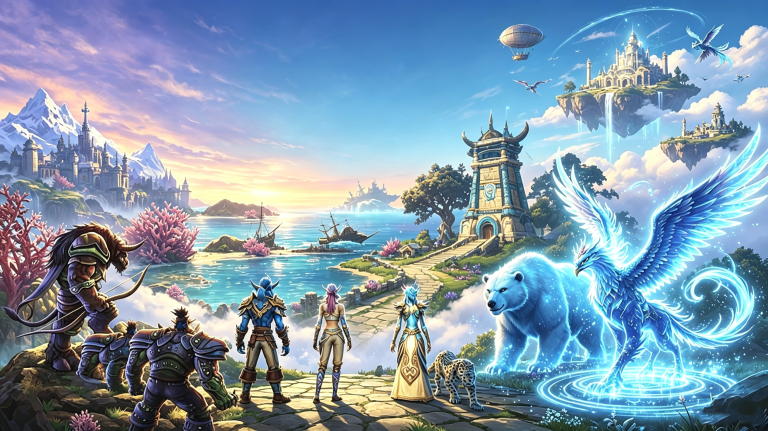
There is something increasingly unusual about the way modern players experience MMORPGs. New content arrives quickly, seasons rotate, gear gets replaced, and players are often encouraged to keep moving toward the next major update. WoW Forever takes a different approach by putting the idea of long-term progression back into the spotlight.
For players who enjoy the slower rhythm of building a character, managing resources, exploring familiar zones, and gradually improving their equipment, that philosophy can be particularly appealing. The interesting question is not simply what content the game offers, but why this type of progression still matters in an MMO landscape that has become increasingly focused on speed and efficiency.
Progression Feels Different When There Is No Rush
One of the defining pleasures of a long-running MMO is watching a character develop over time. A new weapon, a useful piece of armor, or a well-timed upgrade can feel meaningful because it represents hours of previous effort.
That relationship between time and progression is important. When every upgrade arrives too quickly, individual rewards can start to feel disposable. When resources have to be managed carefully, however, players naturally begin thinking about what they actually need.
Gold becomes part of that decision-making process. Players need currency for equipment, consumables, repairs, crafting, trading, and other aspects of character development. For some players, deciding when to spend and when to save can be almost as interesting as the combat itself.
The MMO Economy Is Part of the Game
It is easy to think of an MMO economy as something happening in the background, but experienced players know that it can influence almost every stage of progression.
A player who spends everything immediately may struggle when an important opportunity appears later. Another player might save aggressively but discover that their character is falling behind because they are refusing to invest in necessary upgrades.
This is where the conversation around buy WoW Forever Gold becomes more complicated than simply acquiring additional currency. The real issue is how players approach progression and whether additional resources fit into their personal playstyle.
For players who choose to use external services, reliability and account security should remain important considerations. Gold should support the experience rather than replace the reasons for playing the game in the first place.
Gear Progression Is About More Than Bigger Numbers
Another reason long-term MMORPG systems remain attractive is the relationship between equipment and playstyle.
A new item is not automatically valuable simply because its numbers are higher. Different builds may prioritize different attributes, while certain encounters can make particular defensive or offensive choices more useful.
This creates a natural progression loop:
earn resources → evaluate equipment → upgrade strategically → test the build → adjust → repeat.
That loop is one of the foundations of the classic MMO experience. Players are not merely collecting stronger items; they are gradually learning what works for their character.
Why Community Knowledge Still Matters
MMORPGs have always been social games, even when players are technically playing alone.
Forums, Discord communities, guilds, guides, videos, and casual conversations all contribute to the collective knowledge surrounding a game. One player’s discovery can quickly become another player’s strategy.
This is particularly noticeable when discussing gold management. Experienced players tend to develop their own rules for spending currency. Some prioritize gear, others focus on crafting, while others prefer keeping a reserve for unexpected expenses.
There is no single formula that works for every character. The value of a resource depends heavily on progression stage, class, goals, and playstyle.
The Modern Appeal of an Older MMO Philosophy
The broader trend surrounding WoW Forever reflects something interesting about the MMO genre. Players have access to faster progression than ever, yet there remains an audience for games where progress takes time.
That slower pace can create a stronger sense of ownership. When a character has been developed over weeks or months, equipment and currency become connected to memories rather than simply being numbers on a screen.
This may explain why discussions around classic-style MMORPG experiences continue to attract attention. The appeal is not necessarily nostalgia alone. It is also the feeling that progression has weight.
Where EZBUFF Fits Into the Conversation
For players researching ways to manage their in-game economy, EZBUFF is one of the services that may appear during that process. If considering buy WoW Forever Gold, players should still take the time to understand the service, its policies, delivery process, and the potential risks associated with third-party transactions.
Ultimately, external resources are only one small part of the larger MMO experience. The more interesting part is what players do with those resources afterward: which upgrades they pursue, which activities they prioritize, and how they shape their characters around the challenges ahead.
The Real Value of Long-Term MMO Progression
WoW Forever highlights a broader truth about MMORPGs: progression is most interesting when players feel connected to it.
Gold matters because it enables decisions. Gear matters because it changes how a character plays. Exploration matters because it creates experiences that cannot be measured simply through statistics.
That is why the MMO economy remains such an important part of the genre. Whether players earn everything through regular gameplay or explore additional options such as buy WoW Forever Gold, the goal should ultimately remain the same—building a character and a playstyle that feel genuinely their own.
In an era where many games compete for attention through constant updates and rapid rewards, there is still something compelling about an MMO that gives players a reason to slow down, make choices, and enjoy the journey.