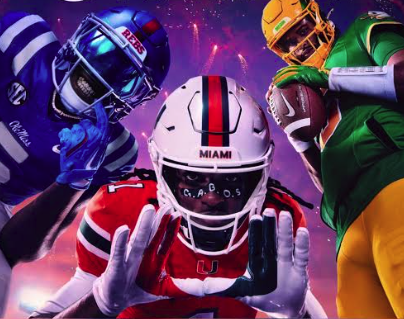
The game is no longer just a digital recreation of Saturdays in college football. With the real season now underway, every ranking, upset, transfer story and controversial finish makes the virtual version feel a little more connected to what is happening on the field.
And that connection is becoming more interesting as the wider gaming industry heads toward one of September’s biggest events: BlizzCon 2026.
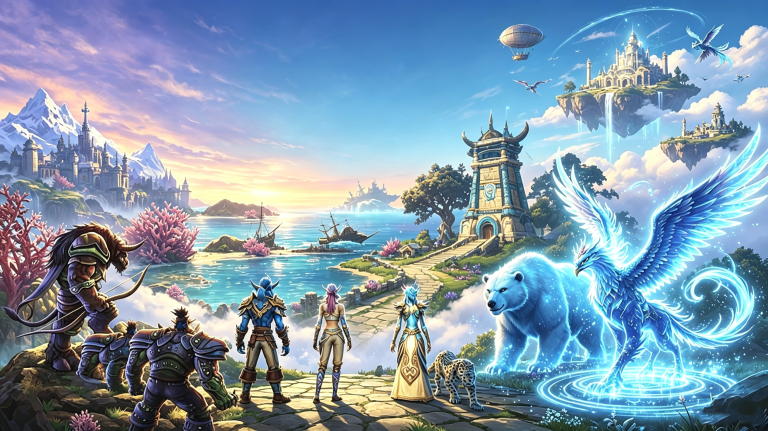
BlizzCon returns to Anaheim on September 12–13, bringing Blizzard’s biggest franchises back into the spotlight. While College Football 27 obviously has nothing to do with Blizzard, the timing highlights a broader change in modern gaming: players increasingly expect games to feel like living platforms rather than products that simply sit on a shelf after launch.
That idea fits College Football 27 surprisingly well.
College Football Is Changing Faster Than Ever
The real 2026 college football season is already providing plenty of evidence.
The College Football Playoff is currently discussing a possible expansion from 12 teams to as many as 24. The CFP has opened a 30-day exclusive negotiation period with ESPN, although no final expansion decision has been made. If a new format is approved, it could potentially take effect for the 2027 season.
Then there are the eligibility battles.
Court rulings, changing NCAA policies and disputes over how long players should be allowed to compete have created a college football environment that can change from week to week. Indiana, for example, recently received a temporary court ruling restoring eligibility for two defensive linemen, while broader legal challenges continue.
For a game like College Football 27, this creates an interesting problem.
How do you simulate a sport that is itself changing faster than traditional annual sports-game development cycles?
That may ultimately become one of the most important questions for EA’s college football series.
The Game Is Becoming a Conversation Starter
One of the more interesting things happening around College Football 27 right now is the way fans are using the game to debate the real season.
A recent simulation asked College Football 27 to predict Ohio State’s 2026 campaign. The result had the Buckeyes finishing 15–1 and winning another national championship, with a predicted overtime loss to Michigan. Other simulations have produced much stranger scenarios, including unexpected conference champions and surprising playoff contenders.
Obviously, nobody should treat a video-game simulation as serious forecasting.
But that isn’t really the point.
The fun comes from comparing the game’s logic with reality.
Can a highly rated quarterback actually live up to his rating? Does a dominant offensive line translate into a deep playoff run? Can a lower-ranked team develop quickly enough in Dynasty Mode to become a national contender?
Those questions are exactly why Dynasty remains such an important part of the College Football experience.
Real College Football Is Giving the Game More Context
The opening weeks of the 2026 season have already delivered the kind of chaos that makes college football special.
Ohio State entered the first AP Top 25 at No. 1, with Georgia and Notre Dame following behind. Indiana climbed to No. 5, while LSU returned to the top 10 after destroying Clemson 51–10. Oregon dropped to No. 6 despite beating Boise State, and Michigan fell out of the rankings after escaping Western Michigan in a bizarre 13–12 finish.
That Western Michigan-Michigan game is particularly interesting from a gaming perspective.
A controversial replay decision added a second back onto the clock, giving Michigan another opportunity to throw a Hail Mary. Western Michigan has since asked the NCAA and CFP to recognize the circumstances surrounding the game, although the NCAA has said there is no mechanism to overturn the result.
You could almost imagine a Dynasty Mode storyline built around something similar.
One play changes a season.
One recruiting class changes a program.
One transfer changes a conference.
That’s the appeal of college football as a game system.
The Bigger Gaming Trend
This is also where the timing of BlizzCon 2026 becomes interesting.
Blizzard’s event is built around long-running communities, continuing updates, developer communication and games that evolve for years. Blizzard has already announced a packed schedule covering major franchises and is preparing both in-person and online experiences for the September 12–13 event.
College Football 27 represents a different model, but players are beginning to expect some of the same qualities from annual sports games.
They want updated rosters.
They want authentic presentation.
They want systems that respond to the real sport.
And most importantly, they want reasons to keep coming back.
That is why the future of College Football may not simply be about better graphics or more realistic player animations. The bigger challenge is making the game feel capable of reflecting the unpredictable ecosystem surrounding modern college football.
Why College Football 27 Feels Timely Right Now
For me, the best time to play College Football 27 isn’t necessarily launch week.
It is now.
The real 2026 season is developing its own story, and that gives Dynasty Mode a different kind of energy. A team that looked unstoppable two weeks ago can suddenly become vulnerable. A freshman can emerge. A transfer can become a star. A conference race can change after one Saturday.
You can then take those ideas into the game and build your own version of the season.
That’s what makes College Football 27 more interesting than simply another annual sports release.
It’s a sandbox for the arguments fans are already having.
Who deserves to be in the playoff?
Which conference is actually strongest?
Can a mid-tier program build itself into a powerhouse?
Does recruiting matter more than scheme?
And, perhaps most importantly, what happens when your favorite team loses a game it absolutely should have won?
College football has never been particularly good at giving fans predictable answers.
College Football 27 shouldn’t either.
With the 2026 season already producing rankings drama, eligibility controversies and serious discussion about the future shape of the College Football Playoff, the real sport is giving the game plenty of material to work with. And as the wider gaming industry prepares for BlizzCon 2026, the larger trend is clear: the most interesting games are increasingly becoming ongoing conversations rather than one-time experiences.
For anyone who enjoys building a program, experimenting with recruiting, chasing championships or simply creating ridiculous Saturday stories with friends, this might be one of the most interesting times to jump back into College Football 27.