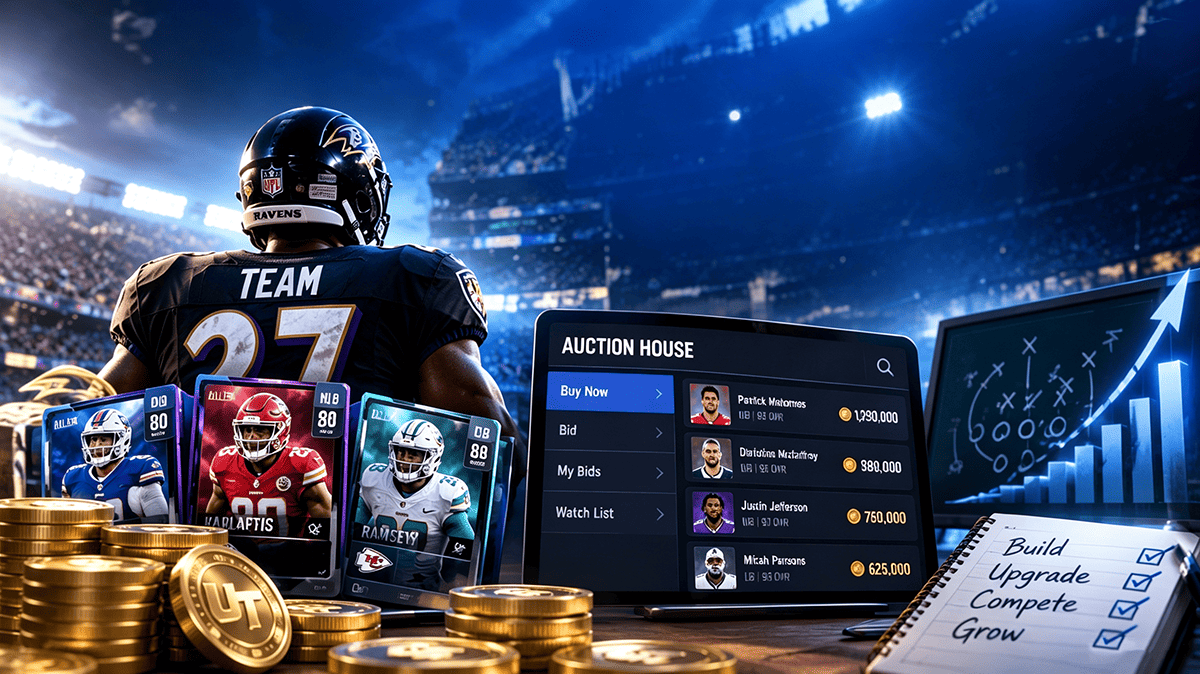
Building a competitive roster has always been one of the most engaging parts of the Madden experience. In Madden NFL 27, that process is once again closely tied to how players manage their in-game resources, evaluate the market, and decide when to invest in upgrades.
For long-time players, the interesting part is not simply having more coins. It is understanding what those coins can actually accomplish.
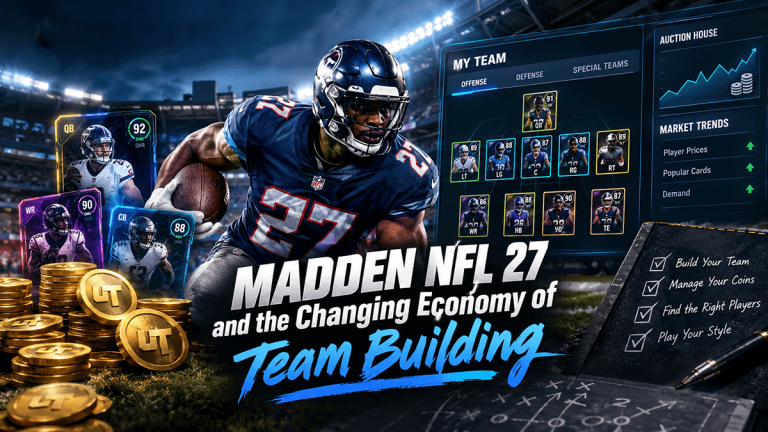
The modern Madden economy has become a strategic layer of Ultimate Team. Every upgrade, auction listing, reward, and roster decision can influence how quickly a team develops. That makes resource management almost as important as knowing how to execute a play on fourth down.
Coins Are Part of the Team-Building Strategy
A strong Ultimate Team roster rarely appears overnight. Players typically move through a cycle of earning rewards, selling unwanted items, completing programs, upgrading positions, and adjusting their lineups as the competitive environment changes.
Coins sit at the center of that cycle.
Instead of treating currency as something to spend immediately, experienced players tend to think in terms of opportunity cost. Spending heavily on one elite player might solve an immediate weakness, but it can also leave less room for improving several other positions.
That decision becomes particularly important early in a new Madden cycle, when player prices and roster values can shift quickly.
The Auction House Changes How Players Think About Value
The Auction House adds another layer to the equation. A player’s overall rating may tell only part of the story. Position, attributes, abilities, current demand, program releases, and supply can all influence how valuable an item feels at a particular moment.
This is where patience can matter.
Rather than buying the first card that fills a roster gap, players can compare multiple listings and consider whether the upgrade is actually worth the asking price. The same principle applies when selling cards. An item that looks unnecessary today could become more valuable when a new program changes demand.
That makes the Auction House less like a simple storefront and more like a constantly moving player-driven marketplace.
Where Resource Management Becomes More Interesting
One of the biggest changes in sports-game progression over the years has been the amount of choice given to players.
There are now multiple ways to improve a roster. Players can grind challenges, participate in programs, complete objectives, open reward packs, trade items through the market, or simply focus on playing competitive modes and letting their rewards accumulate.
For players with limited time, that creates an interesting question: how much time should be spent earning resources compared with actually playing the modes they enjoy?
This is also where searches such as buy Madden NFL 27 Coins enter the broader conversation around Madden’s economy. For some players, purchasing currency represents a shortcut around repetitive progression. Others prefer earning everything through gameplay because the process of building a roster is itself part of the experience.
Neither approach changes the underlying lesson: resources have the most value when players have a clear plan for using them.
Building Around Needs Instead of Names
Another common mistake is chasing recognizable players simply because they are popular.
A roster does not necessarily become better because every position is filled with the highest-profile card available. Madden rewards players who understand how individual attributes interact with their preferred schemes and play styles.
A quarterback with the right throwing characteristics may fit a particular offense better than a more expensive alternative. A defensive back with strong coverage attributes can sometimes address a bigger weakness than another high-rated offensive player.
The smarter approach is to identify weaknesses first and spend second.
The Long-Term Value of a Balanced Roster
Madden NFL 27’s team-building economy also encourages players to think beyond one game.
A temporary upgrade might produce an immediate improvement, but a balanced roster can provide more consistent value across an entire season. Offensive line depth, defensive flexibility, reliable skill-position players, and scheme compatibility can all become important as opponents become more competitive.
This is particularly relevant for players who enjoy gradually evolving their teams rather than rebuilding them every few days.
The goal is not necessarily to spend the most. It is to make each meaningful investment count.
Why the Madden Economy Keeps Players Engaged
There is a larger reason the Ultimate Team economy remains such a prominent part of Madden.
Resource management gives players another form of progression outside the actual football gameplay. Winning a close game is satisfying, but so is finding an affordable player who perfectly solves a roster problem or selling an unused card at the right moment.
That combination of football strategy and economic decision-making gives Madden’s team-building systems their own rhythm.
Communities such as EZBUFF often become part of that conversation as players look for ideas about roster construction, market awareness, and efficient progression. The most useful discussions are rarely just about obtaining more currency. They are about understanding when to spend it, what to prioritize, and when holding onto resources makes more sense.
A More Thoughtful Way to Approach Madden NFL 27
Ultimately, Madden NFL 27’s economy is most interesting when viewed as another strategic system rather than simply a barrier between players and better cards.
Whether coins come from gameplay, rewards, market activity, or other avenues, the same principles remain useful: understand your roster, identify your weaknesses, monitor value, and avoid spending simply because something looks impressive.
For players considering whether to buy Madden NFL 27 Coins, the bigger question should always be what those resources are intended to accomplish. A clear plan can turn currency into meaningful roster improvements, while impulsive spending can leave even a well-funded team without a coherent direction.
That is what makes the Madden economy worth paying attention to. Behind every new card and every roster upgrade is a decision about value, timing, and the kind of team a player actually wants to build.